Is PU foam better than EVA?
Not universally. PU is softer; EVA is firmer and cleaner for case inserts. The right choice depends on product weight, appearance, handling, and shock risk.
PU foam is selected when the product needs softer compression, cushioning, or surface contact than rigid insert foams. It is often used inside cartons, gift boxes, instrument cases, and protective packaging where the foam must absorb vibration while keeping the product in place.
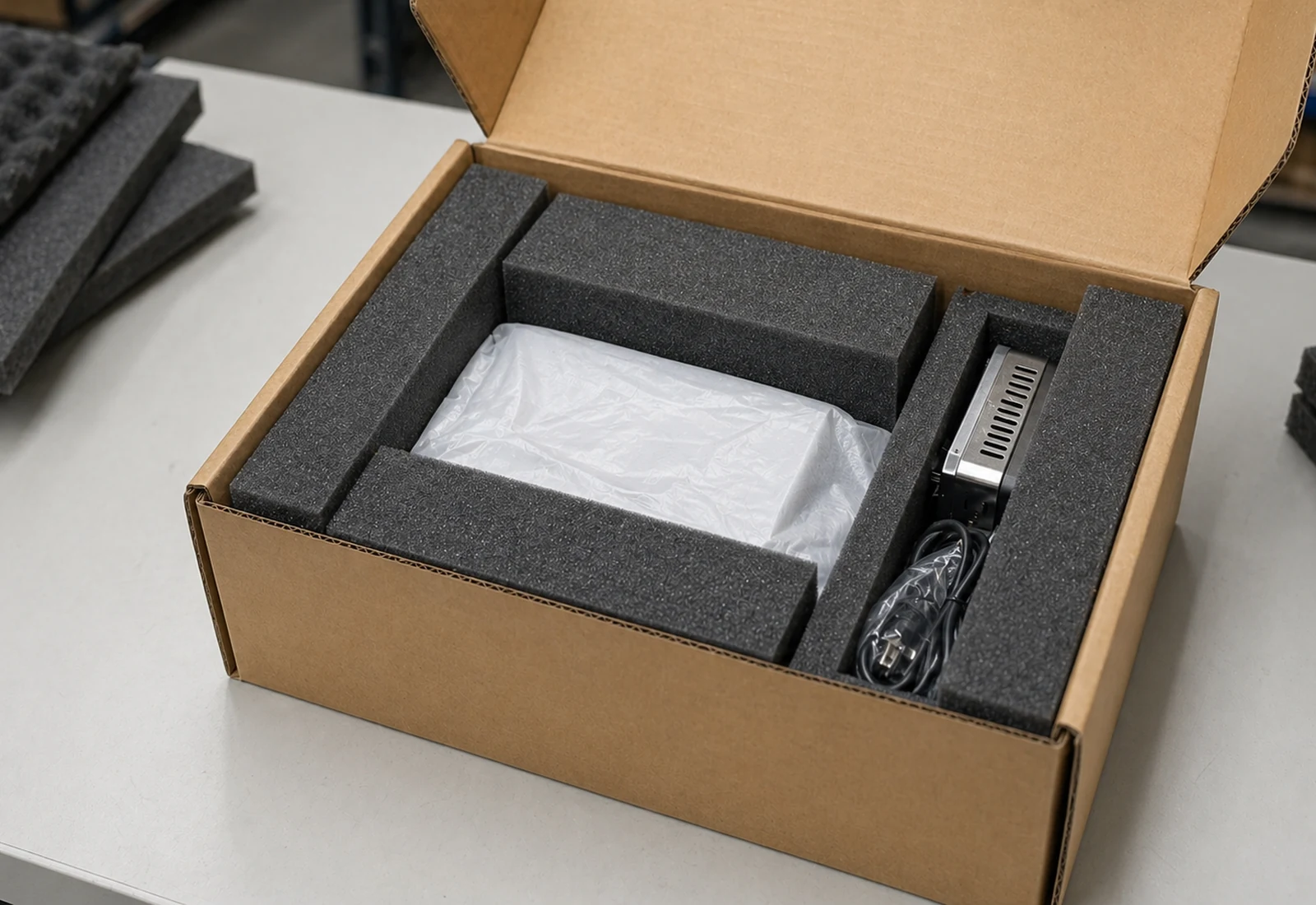
PU foam can protect products that are sensitive to scratches, vibration, or light impact. It is a good option for instruments, samples, fragile accessories, medical-adjacent devices, electronics, and retail packaging where a softer touch is important.
Density, compression, thickness, and cell structure affect performance. A low-density foam may feel soft but fail under heavier products. A higher-density PU foam can support better, but may increase cost and reduce compression.
PU foam can be used as bottom pads, top lid foam, side protection, cavity inserts, and layered packaging. For export shipments, it is often combined with carton strength, product bagging, and outer packaging requirements.
Not universally. PU is softer; EVA is firmer and cleaner for case inserts. The right choice depends on product weight, appearance, handling, and shock risk.
Yes. PU foam is often used in gift boxes and retail packs when a soft cushion feel is desired.
Yes, black PU foam is common, with other colors depending on material availability and quantity.
Photos, drawings, and product weight help us recommend foam type, cavity design, and a practical sample route.